
An Excerpt from the Play “As You Like It”
William Shakespeare
Editorial Note:
“It is not Shakespeare only who divided the ages
of man into a series of seven, but Nature herself.”
(Helena Blavatsky, in The Secret Doctrine, Vol. II, p. 117.)
Various students of esoteric philosophy claim that the English actor William Shakespeare actually only lent his name, agreeing to appear as the author of the numerous plays written by the thinker and statesman Francis Bacon. Manly P. Hall and Ms. Jean Overton Fuller are among those who present evidence in this respect. The controversy is mentioned twice in passing in the Mahatma Letters (see Letters 55 and 93).
The following excerpt, from the comedy “As You Like It”, is an exercise in irony and a meditation on the cyclic passage of human life. It constitutes an encouragement for us not to waste too much time with our lower selves – the outer shells – and to try to expand our contact with our higher self, Atma-Buddhi, the immortal soul.
The excerpt belongs to Scene Seven of Act II. A few lines earlier, a character in the comedy states:
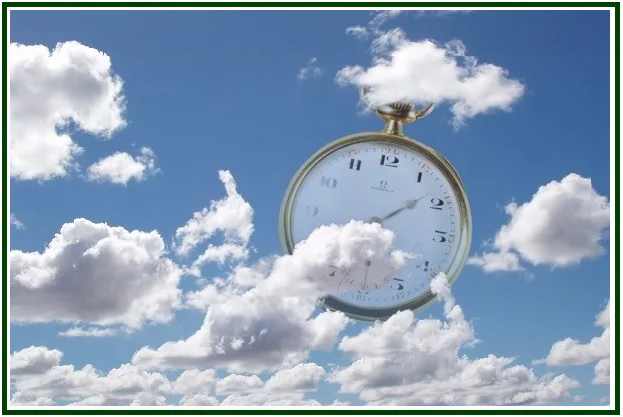
“It is ten o’clock.
Thus we may see how the world wags.
It’s but an hour ago since it was nine,
And after one hour more ’twill be eleven.
And so from hour to hour we ripe and ripe,
And then from hour to hour we rot and rot,
And thereby hangs a tale.”
The pessimism in Shakespeare is but an outward layer of the message. The practical lesson tells us to live each moment of life with full attention and responsibility.
(Carlos Cardoso Aveline)
The Seven Ages of Man
William Shakespeare
This wide and universal theater
Presents more woeful pageants [1] than the scene
Wherein we play in.
All the world’s a stage,
And all the men and women merely players.
They have their exits and their entrances,
And one man in his time plays many parts,
His acts being seven ages. At first the infant,
Mewling and puking in the nurse’s arms.
Then the whining schoolboy with his satchel
And shining morning face, creeping like snail
Unwillingly to school. And then the lover,
Sighing like furnace, with a woeful ballad
Made to his mistress’ eyebrow.
Then a soldier,
Full of strange oaths and bearded like the pard [2],
Jealous in honor, sudden and quick in quarrel,
Seeking the bubble reputation
Even in the cannon’s mouth. And then the justice,
In fair round belly with good capon lined,
With eyes severe and beard of formal cut,
Full of wise saws [3] and modern instances;
And so he plays his part.
The sixth age shifts
Into the lean and slippered pantaloon
With spectacles on nose and pouch on side,
His youthful hose, well saved, a world too wide
For his shrunk shank, and his big manly voice,
Turning again toward childish treble, pipes
And whistles in his sound. Last scene of all,
That ends this strange eventful history,
Is second childishness and mere oblivion,
Sans teeth, sans eyes, sans taste, sans everything.
NOTES:
[1] Pageants – theatrical shows.
[2] Pard – a panther, a wild beast.
[3] Saws – sayings.
The above text has been available on the websites of the Independent Lodge of Theosophists since 4 September 2026. It is reproduced from “As You Like It”, Act II, Scene VII, in “The Complete Works of William Shakespeare”, edited by W. J. Craig, M.A., Magpie Books, London, 1992, 1142 pp.
Read more:
* The Mahatmas and Christianity.
* Do Theosophists Fight Demons?
* Freedom From Mind Manipulation.
* Helena Blavatsky’s Self-Criticism.
* Examine the thematic section on Mahatmas, Disciples and the Search for Discipleship.

Helena Blavatsky (photo) wrote these words: “Deserve, then desire”.
Subscribe to receive updates in your email:
By subscribing, you accept our Privacy Policy.